Emma Sleep Review 2026 — Does the Most Award-Winning Mattress Live Up to It?
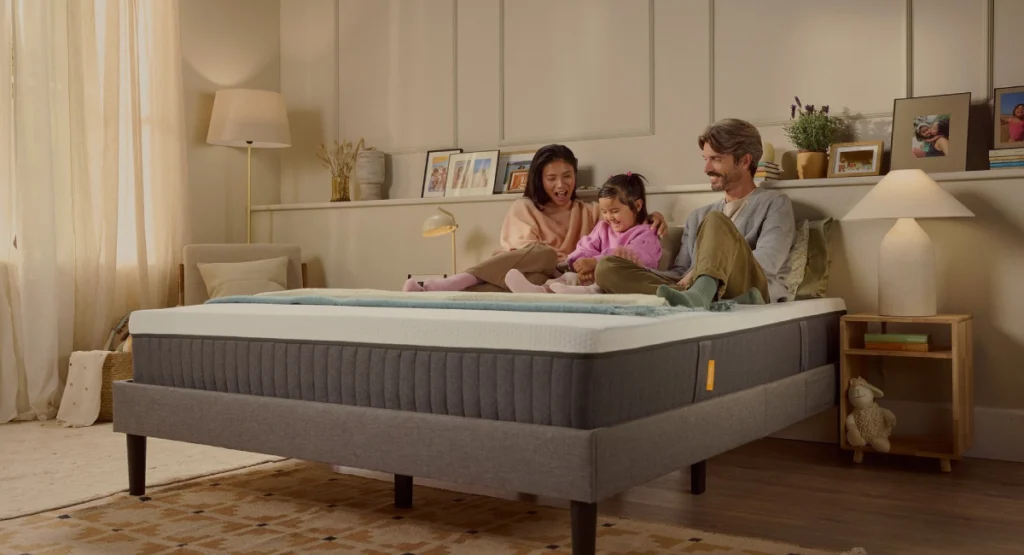
Emma Sleep has collected more mattress awards than any other brand I can find reference to. The “World’s Best Mattress” designation from the Sleep Foundation, multiple Which? Best Buy awards, constant editorial recommendations. For a mattress company that’s only been around since 2013, the award velocity is remarkable.
The question that deserves honest examination is whether the awards reflect genuine product quality or a very successful PR operation. Having tested the mattress and read through a substantial body of verified customer experience, here’s the actual picture.
Quick Highlights
- ✅ 200-night free sleep trial — among the most generous in the industry
- ✅ Motion isolation is excellent — partner movement doesn’t transfer
- ✅ Medium-firm feel suits the widest range of sleepers (back, side, combination)
- ✅ Cooling properties better than most foam-only mattresses at comparable price
- ✅ Free delivery and collection on returns — no friction in the trial process
- ✅ Multiple award citations from independent sleep and consumer organizations
- ❌ Firmness may not suit very heavy sleepers (over 250 lbs) who need more support
- ❌ Some buyers describe off-gassing smell for the first few days after unboxing
- ❌ Edge support is weaker than coil-based mattresses — sleeping at the very edge is less supported
- ❌ Not ideal for stomach sleepers who need very firm support
- ❌ Price has increased in recent years — no longer the budget option it launched as
Best for: Back and side sleepers, couples who need motion isolation, anyone transitioning from a sagging older mattress, and buyers who want a long trial period to genuinely evaluate comfort without risk.
About Emma Sleep
Emma Sleep was founded in 2013 in Frankfurt, Germany by Dennis Schmoltzi and Manuel Müller. The brand was among the first to pioneer the “mattress in a box” model in Europe — rolled compressed foam mattresses that could be shipped directly to consumers and unboxed at home.
The original Emma Mattress used a three-layer foam construction: a top comfort layer, a pressure-relieving Airgocell foam layer, and a firm support base. The current Emma Premium and Emma Hybrid ranges have evolved significantly — adding pocket springs in the Hybrid, adding more sophisticated cooling technologies, and adding more firmness options.
The brand has sold over 3.5 million mattresses globally, operates in over 30 countries, and has won over 1,000 awards by their own count. Independently verified awards from Which?, the Sleep Foundation, and major consumer organizations are the credible ones.
Emma Sleep Review: Full Breakdown
Comfort and Feel
The Emma Original sits at a medium-firm feel that independent testing consistently validates as appropriate for the widest range of sleep positions and body types. Back sleepers and side sleepers — the two most common sleep positions — both find the pressure relief and spinal alignment it provides appropriate.
The Airgocell foam layer specifically targets pressure points at the shoulder and hip — the areas where side sleepers typically experience discomfort on mattresses that are either too firm or too soft. Multiple verified buyers describe shoulder pain that was present on their previous mattress disappearing within the first week on Emma.
The motion isolation is one of the most consistently praised features among couples. The foam construction absorbs movement rather than transferring it across the mattress surface. Buyers with restless partners specifically describe improved sleep quality from the motion isolation properties.
The Trial and Delivery Process
200 nights. That’s Emma’s trial period. Not 30 nights, not 100 — 200 nights, which is six and a half months. For a product where genuine comfort evaluation requires time for the mattress to settle and for your body to adjust to a new sleep surface, this trial period is genuinely meaningful.
Collection on returns is free. Emma sends someone to collect the mattress — you don’t have to figure out how to return a rolled mattress. Multiple verified buyers who returned mattresses describe the process as smooth and the refund as prompt.
Free delivery is standard on all Emma mattress purchases. Delivery to the room of your choice is available as an upgrade.
Temperature Regulation
Pure foam mattresses trap heat — this is a well-documented property of foam and the most consistent complaint about foam mattresses from warm sleepers. Emma’s Airgocell foam is open-cell structured to improve air circulation, which helps but doesn’t eliminate the foam heat-trapping tendency.
The Emma Premium and Emma Hybrid address this more aggressively with specific cooling materials. For warm sleepers, the Hybrid with its spring layer is the recommended option — springs allow more air movement than all-foam construction.
Edge Support
The weakest aspect of Emma’s all-foam models is edge support. The perimeter of the mattress compresses significantly when sitting on it or sleeping very close to the edge. For buyers who sleep near the mattress edge or use the edge for sitting while getting dressed, this is noticeable.
The Hybrid models improve edge support with the perimeter reinforcement that springs allow. If edge support matters, choose the Hybrid.
Best Emma Sleep Products Worth Buying
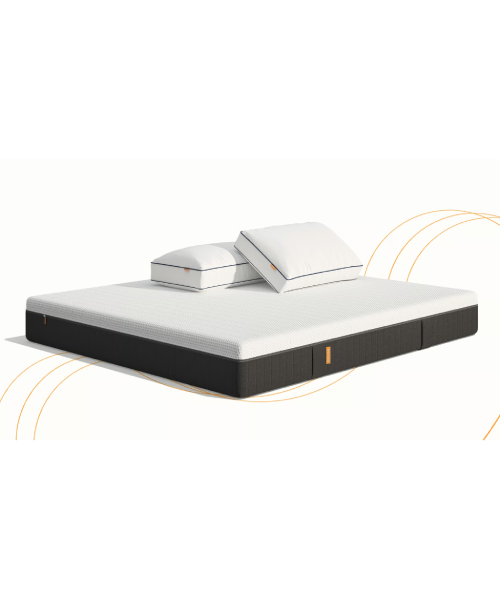
Best for: The widest range of sleepers — back sleepers, side sleepers, combination sleepers, and couples needing motion isolation.
Top Features:
- Three-layer foam construction with Airgocell pressure relief and firm support base
- Medium-firm feel that independently tested sources consistently recommend as the most broadly suitable firmness level
- 200-night trial with free collection on return — the lowest-risk mattress purchase available at this price tier
One Honest Drawback: Not ideal for stomach sleepers who need very firm support, or heavy sleepers over 250 lbs who may bottom out the foam support layer.
Verdict: The right starting point for most buyers. The trial period removes most of the purchase risk.
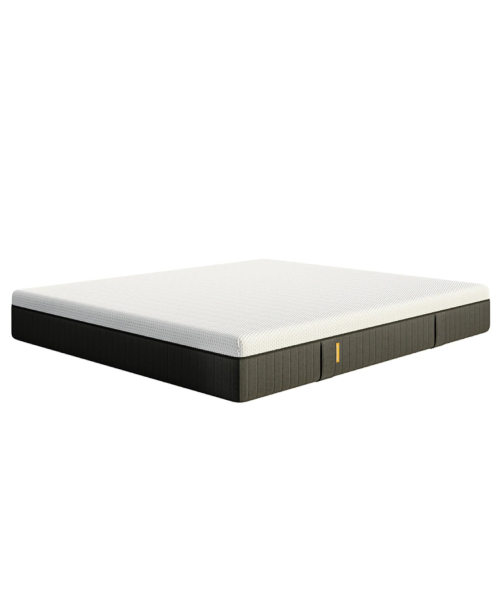
Best for: Warm sleepers, buyers who need better edge support, and anyone who wants the bounce and feel of springs alongside foam comfort.
Top Features:
- Pocket spring layer adds temperature regulation through improved air circulation — genuinely addresses the heat retention issue of all-foam models
- Reinforced edge support makes the full mattress surface usable — no significant compression at the perimeter
- Foam comfort layers retain the Emma Original’s pressure relief while the spring layer adds responsiveness
One Honest Drawback: Higher price point — roughly $300 more than the Original at comparable sizes. The upgrade is worth it for warm sleepers; for temperature-neutral sleepers the Original remains sufficient.
Verdict: The version to buy if you’ve tried foam mattresses before and found them too warm or if edge support matters to you.
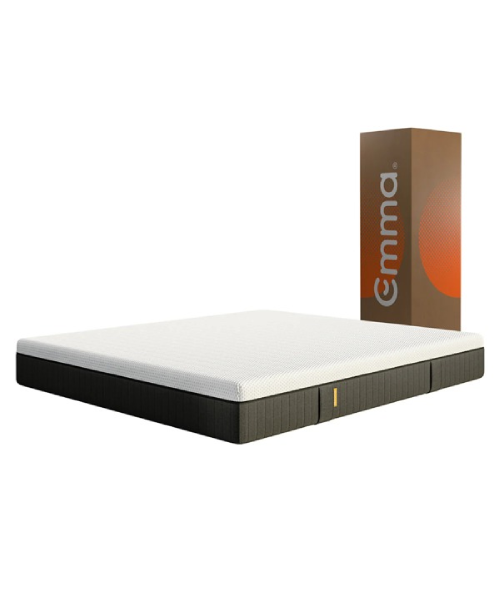
Best for: Buyers who want Emma’s flagship comfort performance with advanced cooling technology and extended support.
Top Features:
- Emma’s most premium all-foam construction with HRX foam technology for improved pressure relief versus the Original
- ClimaSync temperature regulation layer specifically designed for warm sleepers in an all-foam construction
- Available in soft, medium, and firm configurations — the firmness options expand the addressable sleeper population compared to the one-firmness Original
One Honest Drawback: At $1,299+, this competes against quality hybrid mattresses from Saatva and other premium brands. The comparison is worth making before committing.
Verdict: The right choice if you specifically want all-foam (no springs) at the premium end of Emma’s range.
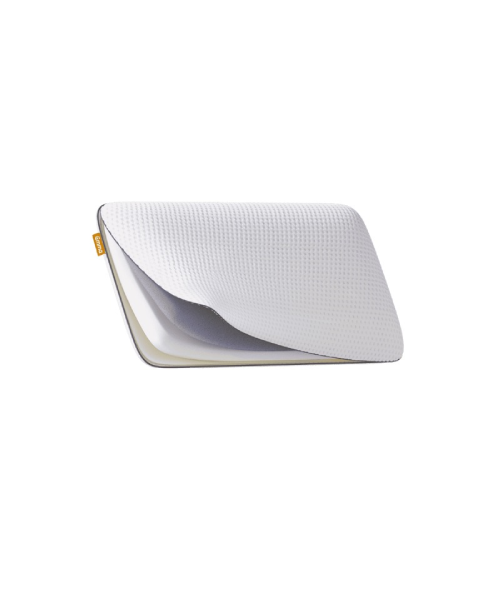
Best for: Emma mattress owners who want a coordinated sleep system, or anyone who wants an adjustable foam pillow with a free trial.
Top Features:
- Adjustable fill — you can remove foam layers to customize the height and firmness to your preference
- Memory foam and Airgocell combination provides both pressure relief and breathability
- Emma offers a trial on pillows too — one of the few pillow brands that backs the comfort claim with a meaningful return policy
One Honest Drawback: Not as distinctive a value proposition as the mattress — comparable pillow quality exists at lower price points.
Verdict: A natural add-on for Emma mattress buyers who want consistency. Not an essential standalone purchase.
What Customers Actually Think
Emma’s verified review base across their own site and independent platforms is large and predominantly positive. The patterns are consistent with what independent testing suggests.
Back and side sleepers who’ve moved from sagging or uncomfortable mattresses describe meaningful sleep quality improvement within the first week. Couples consistently mention motion isolation as the most impactful change from their previous mattress. Warm sleepers overwhelmingly redirect toward the Hybrid after initial Original purchases.
The frustrations that appear: off-gassing smell for the first few days (allow ventilation, it dissipates), the edge support issue for perimeter sleepers, and a small subset of buyers who find the medium-firm feel too soft for their preference.
Real accounts paraphrased:
- “The shoulder pain I’d had for two years on my old mattress was gone within a week. I was skeptical — now I tell everyone.”
- “My partner moves constantly in their sleep. I don’t feel it anymore. This mattress alone has improved my sleep more than anything else I’ve tried.”
- “Strong smell for the first three days after unboxing. Ventilated the room, opened windows, it completely went away. Worth noting but not a dealbreaker.”
- “200-night trial is real. I returned mine at month three and the collection process was exactly as described. Full refund promptly.”
- “Got the Hybrid after finding the Original too warm. The Hybrid is better for summer. Should have started there.”
Is Emma Sleep Worth It?
For back and side sleepers, couples needing motion isolation, or anyone replacing a genuinely worn-out mattress: yes.
The 200-night trial reduces the risk so significantly that “is it worth trying” is almost a different question from “is it worth the money.” The trial allows you to find out whether it works for your sleep without the financial exposure of a non-returnable purchase.
The price has increased since Emma’s early days as a budget disruptor. At current pricing, Emma sits in the mid-range mattress category alongside Casper and Leesa — not premium, not budget.
Emma Sleep vs Casper
Emma Original | Casper Original | |
Trial period | ✅ 200 nights | 100 nights |
Motion isolation | ✅ Excellent | Good |
Cooling | Good | Good |
Edge support | Weak | Weak |
Firmness options | One (medium-firm) | One (medium-firm) |
Price (Queen) | ~$799 | ~$995 |
Awards | ✅ Extensive | Good |
Best for | Value, trial length, couples | Brand recognition |
Where to Buy
emma-sleep.com — direct purchase with full trial and return process. Regular promotional sales, particularly around key retail periods, reduce prices significantly.
Amazon — available with Prime delivery, though the trial and return process is slightly less straightforward than direct purchase.
Buying direct from emma-sleep.com is the recommended route for the cleanest trial and return experience.
FAQs
How firm is the Emma mattress?
Medium-firm. Most independent testers describe it as a 6–7 out of 10 on a firmness scale. The Emma Original doesn’t offer multiple firmness options — the Premium line does.
How long does off-gassing take?
Most buyers describe the smell dissipating within 24–72 hours with good ventilation. Unbox in the room you’ll sleep in, open windows, and it’s typically gone before you need to sleep on it.
Is Emma good for heavy people?
For buyers over 250 lbs, the Original’s support layer may not provide adequate spinal alignment. The Hybrid or a specifically firm mattress is recommended at higher body weights.
Can you return an Emma mattress?
Yes — within 200 nights, with free collection and full refund. Multiple verified buyers have used this process and described it as straightforward.
Similar Brands Worth Knowing
Casper — comparable foam mattress in the same price tier with a shorter trial.
Nectar — longer trial (365 nights), similar foam construction, lower price.
Saatva — premium hybrid mattress with luxury positioning if the Emma Hybrid budget extends further.
Final Verdict
Emma Sleep earns most of its awards through genuine product quality rather than marketing volume. The 200-night trial is the most consumer-friendly in the industry. The motion isolation is among the best available at the price. The comfort profile suits the broadest range of common sleep positions.
The weaknesses are real and consistent: edge support, heat retention on the Original, and firmness that doesn’t suit all sleeper types. The trial exists partly to address these — sleep on it for three months and know for certain rather than guessing from spec sheets.
Overall Rating: 8.4 / 10
Category | Score |
Comfort & Pressure Relief | 9 / 10 |
Motion Isolation | 9.5 / 10 |
Temperature Regulation | 7.5 / 10 |
Edge Support | 6 / 10 |
Trial & Return Policy | 9.5 / 10 |
Value for Money | 8 / 10 |
Overall | 8.4 / 10 |